

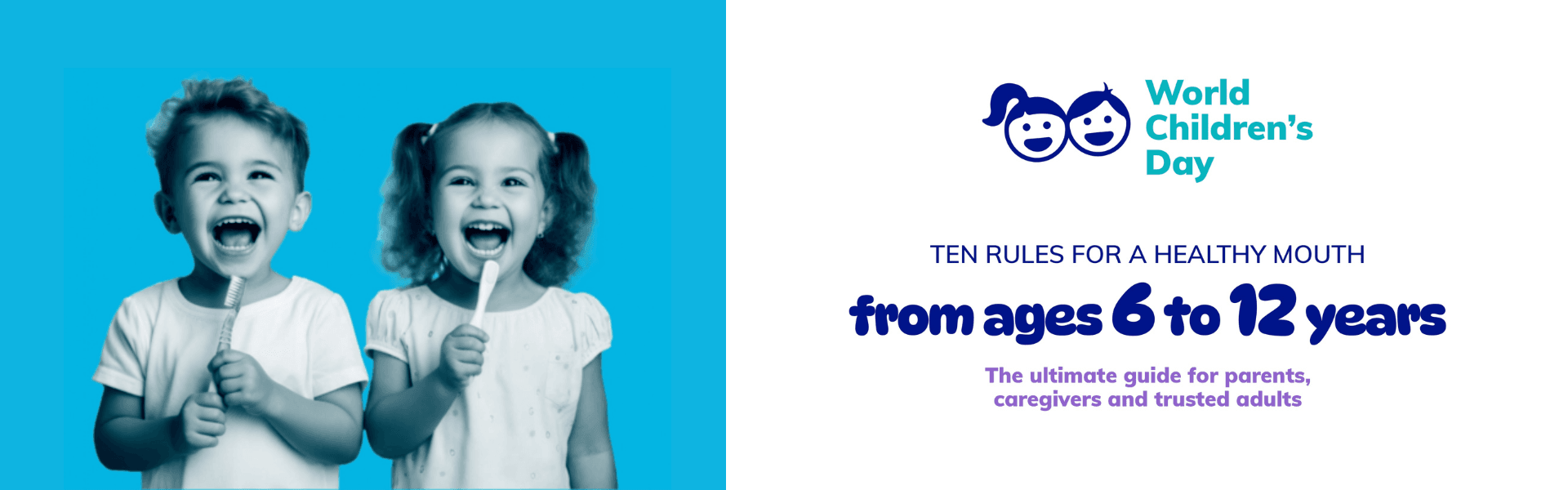
On World Children's Day, Dentaid is sharing ten practical tips for families, caregivers and educators aimed at improving oral health in children aged 6 to 12.
Dental caries remains the most common non-communicable disease in childhood, affecting 600 million children worldwide.
Between the ages of 6 and 12, children go through a key stage of physical and emotional growth, which also involves significant changes in their oral health. It is a transitional period in which baby teeth coexist with the first permanent teeth, making prevention and family support essential to establish healthy habits from an early age.
With this goal in mind, Dentaid, a leading oral health company, presents the “Ten Rules for Oral Health in Middle Childhood”, a practical tool for families, educators, and caregivers to promote hygiene routines, prevent complications, and support the development of healthy teeth, helping to lay the foundation for a full and healthy life.
Dental caries remains the most common non-communicable disease in childhood, affecting more than 600 million children worldwide, according to the World Health Organization. Its occurrence is linked to frequent consumption of sugary foods and drinks, insufficient brushing, and the lack of regular dental check-ups.
Marta Larrea, dentist and Global Medical Lead form Dentaid, explains:
“From ages 6 to 12, children establish routines that will accompany them through adolescence and into adulthood. This set of ten rules will help parents and caregivers supervise children’s oral hygiene through activities that go beyond brushing alone, always grounded in a scientific approach. These tips, together with regular visits to the paediatric dentist and a balanced diet, will lay the foundation for oral health in childhood that can be maintained throughout life.”
Ten Rules for a Healthy Mouth in Middle Childhood
The mouths of children aged 6 to 12 are constantly changing, and every action counts: from how they brush their teeth to what they eat or the trust they develop with their dentist. Small daily routines - supported by family involvement and leading by example - can have a lasting impact, ensuring a healthy mouth today and in the future.

- EFP & Dentaid. (s.f.). Oral health throughout life. European Federation of Periodontology.https://www.efp.org/fileadmin/uploads/efp/Campaigns/Oral_Health_Throughout_Life/OHTL_BROCHURE_AAFF_01ENG.pdf
2. Organización Mundial de la Salud (OMS). (2022). Global oral health status report: Towards universal health coverage for oral health by 2030. World Health Organization.
3. American Academy of Pediatric Dentistry (AAPD). (2015–2016). Policy on early childhood caries (ECC): Classifications, consequences, and preventive strategies. Reference Manual, 37(6).http://www.aapd.org/media/Policies_Guidelines/P_ECCClassifications.pdf
4. Dye, B. A., Hsu, K. L., & Afful, J. (2015). Prevalence and measurement of dental caries in young children. Pediatric Dentistry, 37(3), 200–216.
Between the ages of 6 and 12, children go through a key stage of physical and emotional growth, which also involves significant changes in their oral health. It is a transitional period in which baby teeth coexist with the first permanent teeth, making prevention and family support essential to establish healthy habits from an early age.
With this goal in mind, Dentaid, a leading oral health company, presents the “Ten Rules for Oral Health in Middle Childhood”, a practical tool for families, educators, and caregivers to promote hygiene routines, prevent complications, and support the development of healthy teeth, helping to lay the foundation for a full and healthy life.
Dental caries remains the most common non-communicable disease in childhood, affecting more than 600 million children worldwide, according to the World Health Organization. Its occurrence is linked to frequent consumption of sugary foods and drinks, insufficient brushing, and the lack of regular dental check-ups.
Marta Larrea, dentist and Global Medical Lead form Dentaid, explains:
“From ages 6 to 12, children establish routines that will accompany them through adolescence and into adulthood. This set of ten rules will help parents and caregivers supervise children’s oral hygiene through activities that go beyond brushing alone, always grounded in a scientific approach. These tips, together with regular visits to the paediatric dentist and a balanced diet, will lay the foundation for oral health in childhood that can be maintained throughout life.”
Ten Rules for a Healthy Mouth in Middle Childhood
The mouths of children aged 6 to 12 are constantly changing, and every action counts: from how they brush their teeth to what they eat or the trust they develop with their dentist. Small daily routines - supported by family involvement and leading by example - can have a lasting impact, ensuring a healthy mouth today and in the future.
- EFP & Dentaid. (s.f.). Oral health throughout life. European Federation of Periodontology.https://www.efp.org/fileadmin/uploads/efp/Campaigns/Oral_Health_Throughout_Life/OHTL_BROCHURE_AAFF_01ENG.pdf
2. Organización Mundial de la Salud (OMS). (2022). Global oral health status report: Towards universal health coverage for oral health by 2030. World Health Organization.
3. American Academy of Pediatric Dentistry (AAPD). (2015–2016). Policy on early childhood caries (ECC): Classifications, consequences, and preventive strategies. Reference Manual, 37(6).http://www.aapd.org/media/Policies_Guidelines/P_ECCClassifications.pdf
4. Dye, B. A., Hsu, K. L., & Afful, J. (2015). Prevalence and measurement of dental caries in young children. Pediatric Dentistry, 37(3), 200–216.
Noticias Relacionadas
Children’s Mouthwash: When to Start Using it?

27 May 2020

Cookie Policy
We use our own and third-party cookies to analyse website usage and display ads tailored to your preferences based on a profile created from your browsing habits (e.g., pages visited).
You can accept or reject all cookies, or customise your preferences.